Please note that these are sample papers that we use to revise before getting into the D075 OA. It is not a guarantee that after you review them you will pass, but there is a very high chance that you will do.
If you do not want to risk failing do not hesitate to reach us out, we can take the exam for you and you are assured of passing. We wish you all the best as you revise
Section 1: IT Governance and Strategy (15 Questions)
- Question: What is the primary purpose of IT governance?
- Answer: To ensure that IT aligns with and supports the business strategy and goals of an organization.
- Question: What is the difference between IT governance and IT management?
- Answer: IT governance is concerned with making decisions and setting the strategic direction, while IT management is concerned with the day-to-day operations and tactical execution of those decisions.
- Question: What is a Balanced Scorecard in an IT context?
- Answer: A strategic planning and management system that measures and reports on business performance from four perspectives: financial, customer, internal business processes, and learning and growth.
- Question: What is a Service Level Agreement (SLA)?
- Answer: A formal contract between an IT service provider and a customer that specifies the level of service to be provided.
- Question: Why is a SWOT analysis used in IT strategy?
- Answer: To identify an organization’s internal Strengths and Weaknesses and external Opportunities and Threats related to its IT environment.
- Question: What is the main goal of ITIL (Information Technology Infrastructure Library)?
- Answer: To provide a framework of best practices for IT service management to ensure IT services meet business needs.
- Question: What is a KPI (Key Performance Indicator)?
- Answer: A measurable value that demonstrates how effectively a company is achieving its key business objectives.
- Question: What is the purpose of a business case for a new IT project?
- Answer: To justify the investment in a project by outlining its strategic value, costs, benefits, and risks.
- Question: What is the role of a CIO (Chief Information Officer)?
- Answer: The CIO is the senior executive responsible for the management, implementation, and usability of information and computer technologies.
- Question: What is COBIT (Control Objectives for Information and Related Technologies)?
- Answer: A framework for IT governance and management that helps organizations meet business objectives through effective IT management.
- Question: What is IT portfolio management?
- Answer: The management of an organization’s IT assets, projects, and services to maximize business value.
- Question: What is the difference between a project and a program?
- Answer: A project is a temporary effort to create a unique product, service, or result. A program is a group of related projects managed in a coordinated way to obtain benefits not available from managing them individually.
- Question: What is a key component of change management in IT?
- Answer: A structured approach to managing the transition of individuals, teams, and organizations from a current state to a desired future state.
- Question: What is the purpose of an IT steering committee?
- Answer: A group of senior managers who review and approve IT projects and ensure they align with business strategy.
- Question: Why is a clear IT vision important for a business?
- Answer: It provides a long-term direction and purpose for the IT department, aligning it with the overall business vision.
Section 2: IT Service Management and Operations (15 Questions)
- Question: What is the goal of IT service management (ITSM)?
- Answer: To ensure that the right processes, people, and technology are in place to deliver high-quality IT services that meet customer needs.
- Question: What is the purpose of a service desk?
- Answer: To act as the single point of contact between the IT service provider and the users to handle incidents, service requests, and inquiries.
- Question: What is the difference between an incident and a problem in ITIL?
- Answer: An incident is an unplanned interruption to an IT service. A problem is the underlying cause of one or more incidents.
- Question: What is the goal of problem management?
- Answer: To prevent incidents from happening again and to minimize the impact of incidents that cannot be prevented.
- Question: What is the purpose of change management?
- Answer: To control the lifecycle of all changes to minimize disruption to IT services.
- Question: What is the difference between change management and change control?
- Answer: Change management is the overall process of managing changes. Change control is a part of change management that specifically approves or rejects proposed changes.
- Question: What is a Configuration Management Database (CMDB)?
- Answer: A database that holds information about all the components of an IT system and the relationships between them.
- Question: What is the goal of availability management?
- Answer: To ensure that IT services are available when and where users need them.
- Question: What is a key purpose of IT asset management?
- Answer: To track and manage the lifecycle of an organization’s IT assets, including hardware and software.
- Question: What is the purpose of an IT help desk?
- Answer: To provide support to users, often on a first-come, first-served basis, for basic IT issues.
- Question: What is event management in ITIL?
- Answer: The process of monitoring all events that occur within the IT infrastructure to detect and escalate any issues.
- Question: What is the difference between proactive and reactive problem management?
- Answer: Reactive problem management responds to problems after an incident has occurred. Proactive problem management identifies and resolves problems before they lead to an incident.
- Question: What is the purpose of a service catalog?
- Answer: A list of IT services that a provider offers, often including descriptions, prices, and ordering information.
- Question: What is the goal of capacity management?
- Answer: To ensure that the IT infrastructure has sufficient capacity to meet current and future business demands.
- Question: What is a key role of a service desk analyst?
- Answer: To log, categorize, and resolve incidents and service requests or escalate them to a specialized team.
Section 3: Project Management and Security (15 Questions)
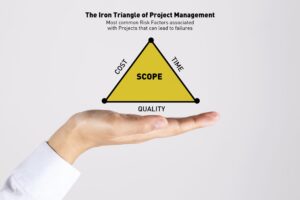
- Question: What are the three constraints of the Project Management Triangle?
- Answer: Scope, time, and cost.
- Question: What is the purpose of a Work Breakdown Structure (WBS)?
- Answer: To break down a project into smaller, more manageable components, making it easier to plan, estimate, and manage.
- Question: What is the difference between a waterfall and an agile project management methodology?
- Answer: Waterfall is a sequential, linear approach. Agile is an iterative and incremental approach that allows for flexibility.
- Question: What is a Gantt chart?
- Answer: A project management tool that provides a visual timeline of a project’s schedule, showing start and finish dates for tasks.
- Question: What is a project charter?
- Answer: A formal document that officially authorizes a project and provides the project manager with the authority to apply organizational resources to project activities.
- Question: What is the purpose of a risk register?
- Answer: To document potential risks, their likelihood, impact, and planned mitigation strategies.
- Question: What are the three main components of the CIA Triad in information security?
- Answer: Confidentiality, Integrity, and Availability.
- Question: What is the difference between vulnerability and a threat?
- Answer: A threat is a potential cause of an incident that may result in harm. A vulnerability is a weakness that could be exploited by a threat.
- Question: What is malware?
- Answer: Malicious software designed to disrupt, damage, or gain unauthorized access to a computer system.
- Question: What is the purpose of a firewall?
- Answer: To monitor and control incoming and outgoing network traffic based on predetermined security rules.
- Question: What is phishing?
- Answer: A social engineering attack that attempts to trick users into providing sensitive information, often through fake emails or websites.
- Question: What is the difference between a risk and a vulnerability?
- Answer: A risk is the potential for loss or damage when a threat exploits a vulnerability. A vulnerability is the weakness itself.
- Question: What is a penetration test?
- Answer: A simulated cyberattack against a computer system to check for exploitable vulnerabilities.
- Question: What is the purpose of data encryption?
- Answer: To encode data so that only authorized parties can read it, ensuring its confidentiality.
- Question: What is the purpose of a Disaster Recovery (DR) plan?
- Answer: A set of procedures to enable an organization to quickly recover and resume business operations after a catastrophic event.